Strong flour (bread flour)
Flour with more protein than plain or all-purpose flour. That protein forms gluten, which gives bread its structure and chew. Called strong flour in the UK, bread flour elsewhere.
Wholemeal (whole wheat)
Flour milled from the whole grain, including the bran and germ, so it keeps more fibre and flavour. Wholemeal in the UK, whole wheat in the US.
Hydration
How much water the dough holds, given as a percentage of the flour's weight. Higher hydration gives a more open, airy crumb but a stickier dough; lower hydration is firmer and easier to handle.
Baker's percentage
The baker's way of writing a recipe, where every ingredient is given as a percentage of the flour. It lets you scale a loaf up or down to any size while keeping it balanced.
Knead
Working the dough to develop the gluten, until it turns smooth, springy and stretchy. Usually around ten minutes by hand.
Windowpane test
A quick check that kneading is done: stretch a small piece of dough thin enough to see light through it without tearing. If it holds, the gluten is ready.
Prove (proof)
Letting the dough rest and rise while the yeast works. Most loaves have a first prove after kneading and a second after shaping. Spelled prove in the UK, proof in the US.
Knock back (punch down)
Gently deflating the risen dough before shaping, to release large gas bubbles and even out the crumb.
Shape
Forming the dough into its final shape, a tin loaf, a round, a baton, building surface tension so it holds and rises well.
Score (slash)
Cutting the top of the loaf just before baking. It controls where the bread expands and leaves that classic bakery finish.
Oven spring
The final burst of rise in the first minutes of baking, as the heat gives the yeast one last push before it sets.
Crumb
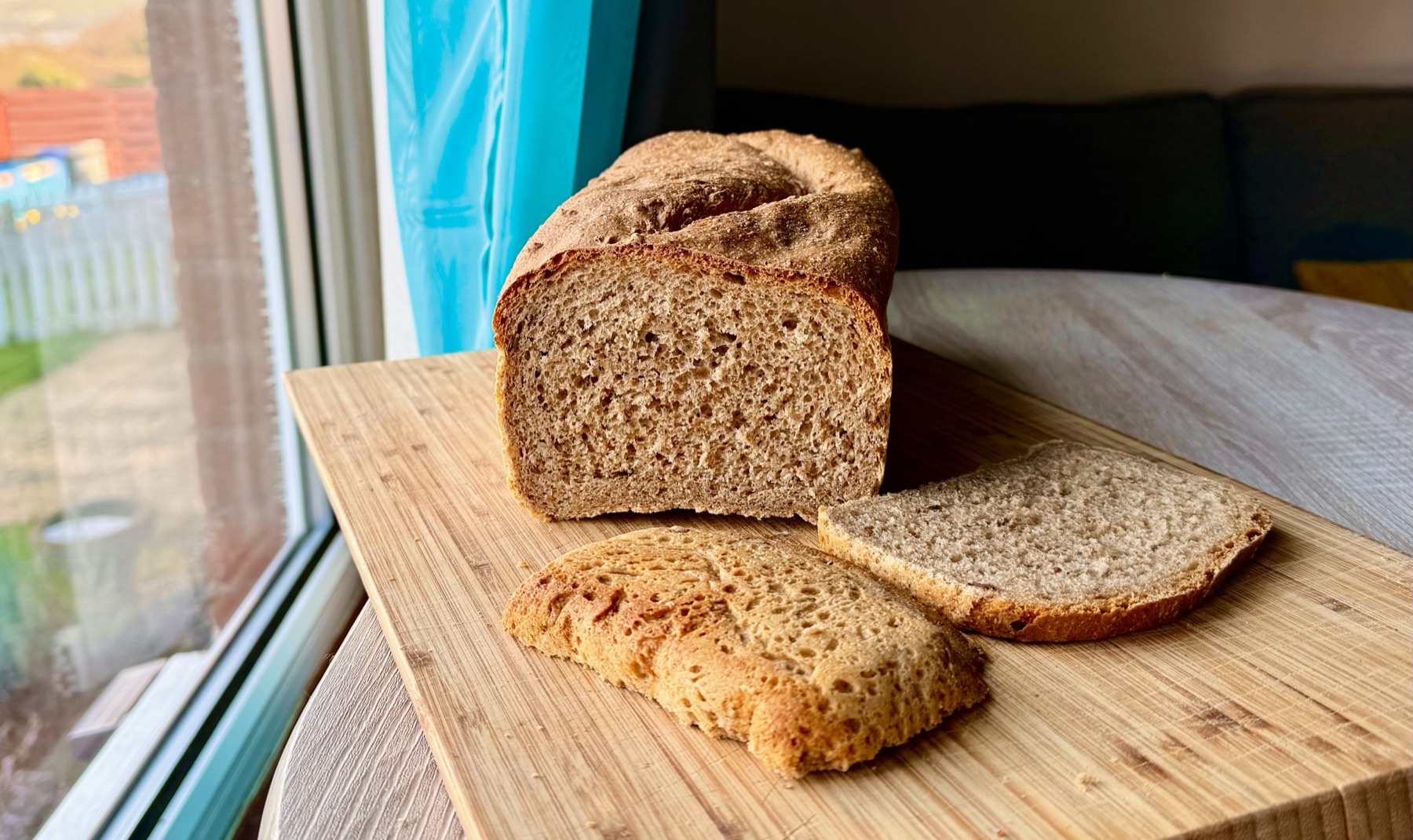
The soft inside of the loaf. An open crumb has large, irregular holes; a tight crumb is fine and even, better for sandwiches.
Crust
The baked outer shell. Steam in the oven, and a good bake, give a crust that is deep in colour and crisp.
Enriched dough
Dough enriched with fat, milk, egg or sugar, as in a milk loaf or brioche. Softer and richer than a plain loaf, and usually a little slower to rise.
Starter
The living culture of wild yeast and bacteria used to raise sourdough, kept alive with regular feeds of flour and water. A yeasted loaf needs none.
Loaf tin (loaf pan)
The rectangular tin that gives a sandwich loaf its shape. Tin in the UK, pan in the US.
Learn the words by baking the bread
Breaditorial guides you through every step with plain language and timers, calculates the exact weights for your tin and flour, and keeps a journal of every loaf. The jargon makes sense once your hands are in the dough.