Bread is older than farming
We tend to assume bread came after agriculture, but the evidence points the other way. Archaeologists have found the charred remains of a flatbread-like food in the Middle East dating back around 14,000 years, thousands of years before people began farming grain. In other words, we may have been baking before we were sowing.
A "companion" is someone you share bread with
The word companion comes straight from the Latin com, meaning "with", and panis, meaning "bread". A companion is, quite literally, a person you break bread with. Few foods are woven so deeply into the idea of company.
"Lord" and "lady" are hidden loaves
English hides bread in its oldest words for rank. Lord descends from the Old English hlāfweard, the "loaf-ward" or keeper of the bread. Lady comes from hlǣfdige, the one who kneaded it. The household ran on bread, and its language remembered.
Four ingredients, endless bread
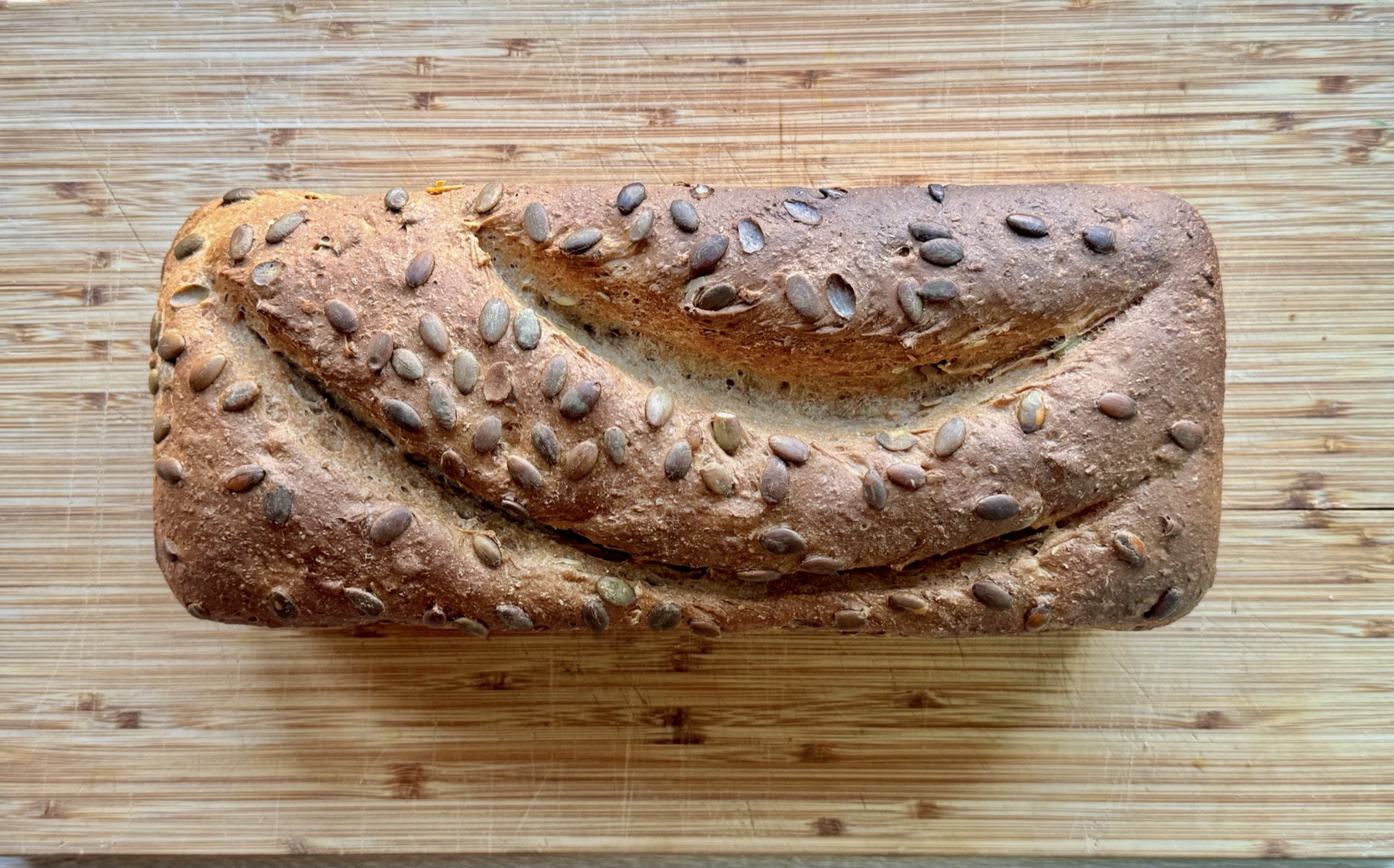
For all its history, real bread has never needed more than flour, water, a raising agent and salt. Everything else, from a plaited loaf to a seeded tin to an airy focaccia, is a variation on those four. It is one of the simplest foods there is, and one of the most rewarding to get right.
It goes stale because it is real
A good homemade loaf firms up within a day or two, and that is a sign of quality, not a flaw. Bread that stays soft for a fortnight is being held there by additives. Real bread is at its best fresh.
To keep it longer, slice the whole loaf and freeze it, so you can take out just what you need, when you need it.
Join the oldest craft there is
Breaditorial calculates the exact weights for your tin and flour, guides you through every step, and keeps a journal of every loaf. A calm, foolproof way to bake real bread at home.