What "ultra-processed" means
Processing itself is not the problem. Milling wheat into flour is processing. Baking is processing. The term ultra-processed describes something more specific: foods built in a factory from industrial ingredients and additives you would never keep in a home kitchen, designed to be cheap, uniform, and to last.
With bread, that means a loaf which starts from flour, water and yeast like any other, but then leans on a list of extras to survive the journey from production line to shelf to your kitchen a week later.
Why most sliced bread qualifies
Turn a standard long-life wrapped loaf over and you will often find, beyond flour, water, yeast and salt:
- Emulsifiers (such as mono- and diglycerides of fatty acids) to keep the crumb soft for days.
- Preservatives (such as calcium propionate) to hold back mould.
- Enzymes and dough conditioners to make the dough behave on fast industrial lines.
- Added sugars and vegetable oils that a plain loaf has no need for.
A real loaf needs none of these. They exist to solve the problems of scale and shelf life, not to make better bread.
How to tell in ten seconds
You do not need to memorise additive names. Two quick checks do most of the work:
- Count the ingredients. Real bread has roughly four to six. A long list is the first clue.
- Look for words you would not cook with. If you would not find it in a kitchen cupboard, it is there for the factory, not for you.
Is ultra-processed bread bad for you?
This is where honesty matters. A single slice will not harm you, and not every additive is dangerous. What research increasingly points to is that diets high in ultra-processed foods as a whole are associated with poorer health outcomes. Bread is worth attention simply because most people eat so much of it, so it is an easy, everyday place to swap something industrial for something real.
The simple alternative
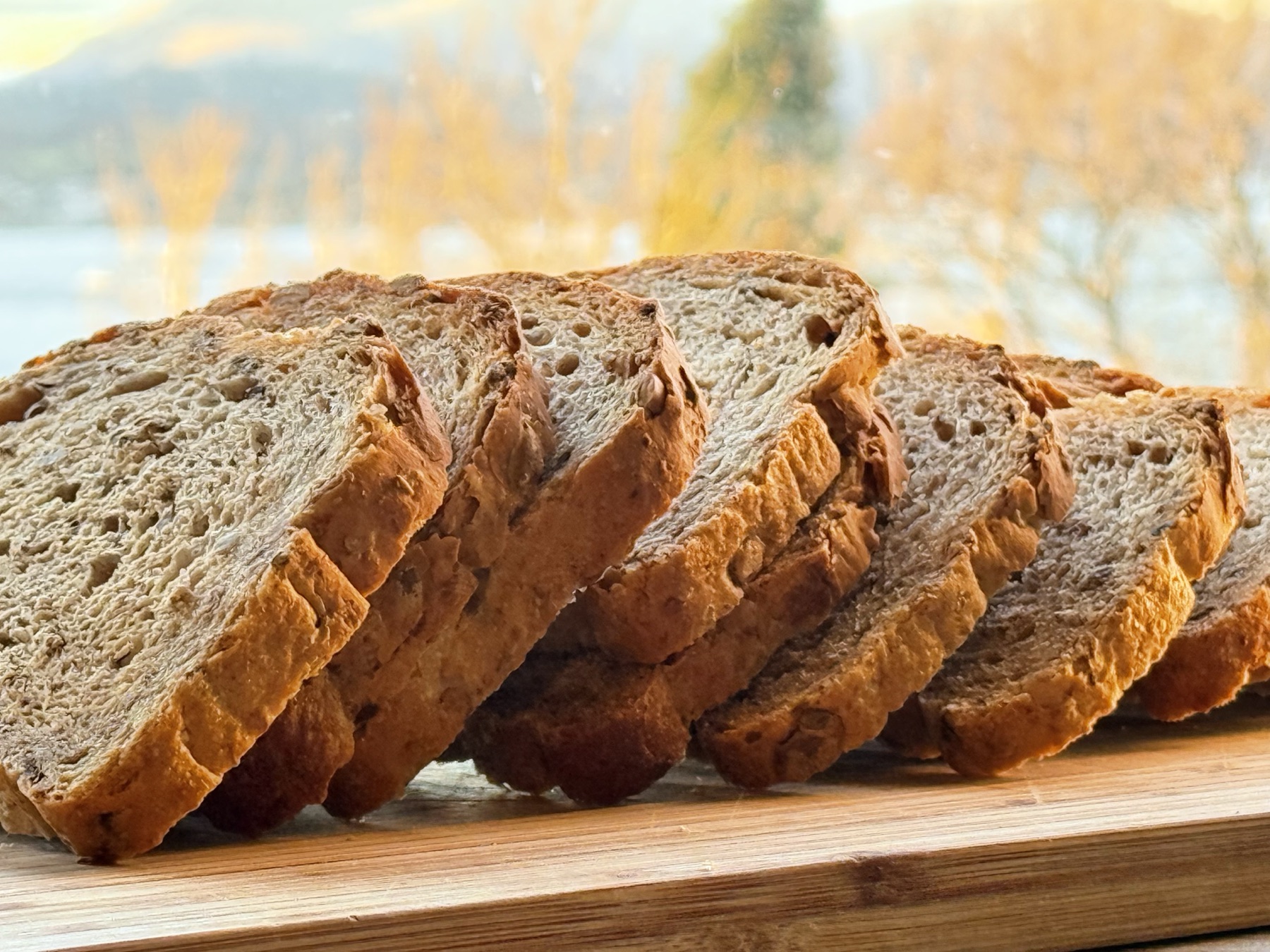
Homemade bread is the opposite of ultra-processed by definition. Flour, water, yeast and salt, with seeds or wholemeal if you like. There are no additives because you never reach for any. It goes stale in a few days, which is exactly what real food does, and it is one of the most satisfying swaps you can make.
Make the real thing, reliably
Breaditorial calculates the exact weights for your tin and flour, guides you through every step, and keeps a journal of every loaf. Real bread, no additives, no guesswork.

Frequently asked questions
What is ultra-processed bread?
Bread made with industrial ingredients and additives you would not use at home, such as emulsifiers, preservatives, dough conditioners and enzymes. Most long-life supermarket sliced bread falls into this category.
Is all shop bread ultra-processed?
No. Plainly made loaves from a good bakery, and some supermarket breads, contain only basic ingredients. It is mainly the soft, long-life, wrapped sliced loaves. Reading the ingredients list is the way to tell.
Is homemade bread ultra-processed?
No. Bread you bake from flour, water, yeast and salt is about as far from ultra-processed as food gets, because you never add any additives.